


The Ultimate Guide to Pool Nets and Skimmers

The net on your truck affects debris capacity, water resistance, and how efficiently you clear each pool on the route.
One Net Does Not Fit Every Route
Heavy leaves, routine organic debris, and fine particles do not put the same demands on a pool net. Mouth width affects coverage. Bag depth affects capacity. Mesh affects which particles stay in the bag and how freely water passes through it.
For a professional route, choose the net used most often around the conditions you see repeatedly, then confirm the pole reach that supports it. Add a complementary net when a recurring group of stops requires a different mesh, depth, width, or emptying method.
Should a Pool Professional Carry More Than One Net?
A second net earns space on the truck when it handles a recurring job more efficiently than the primary net.
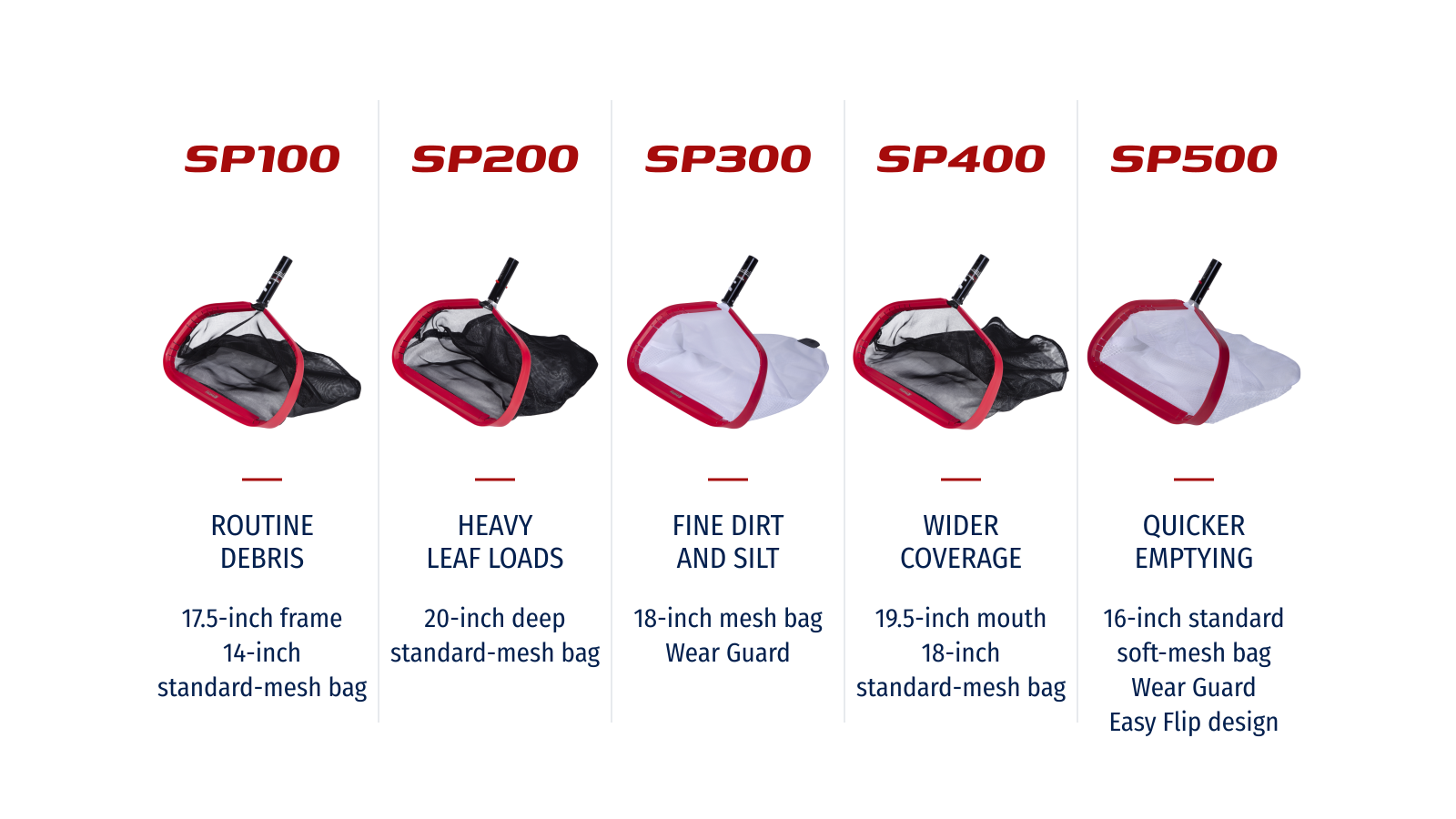
- Heavy leaf loads: the Spartan SP200 uses a 20-inch deep standard-mesh bag for greater capacity.
- Fine dirt and silt: the Spartan SP300 uses an 18-inch fine-mesh bag designed to capture smaller debris, including silt.
- Quicker emptying: the Spartan SP500 pairs a 16-inch standard soft-mesh bag with Wear Guard and Easy Flip design.
The right combination of nets depends on the debris and pool dimensions encountered across the route.
When Your Route Setup Is Slowing Down the Stop
A net becomes a route problem when its mesh, depth, width, or construction no longer matches the recurring work.
- Frequent emptying during heavy-debris stops indicates a need for greater bag capacity.
- Fine debris passing through the bag indicates a need for finer mesh.
- Repeated difficulty collecting debris in common areas indicates the rake or skimmer style no longer matches the stop.
- One net forcing extra passes across recurring conditions indicates a need for a complementary second style.
Standard Mesh vs. Fine Mesh: Think About Debris and Drag
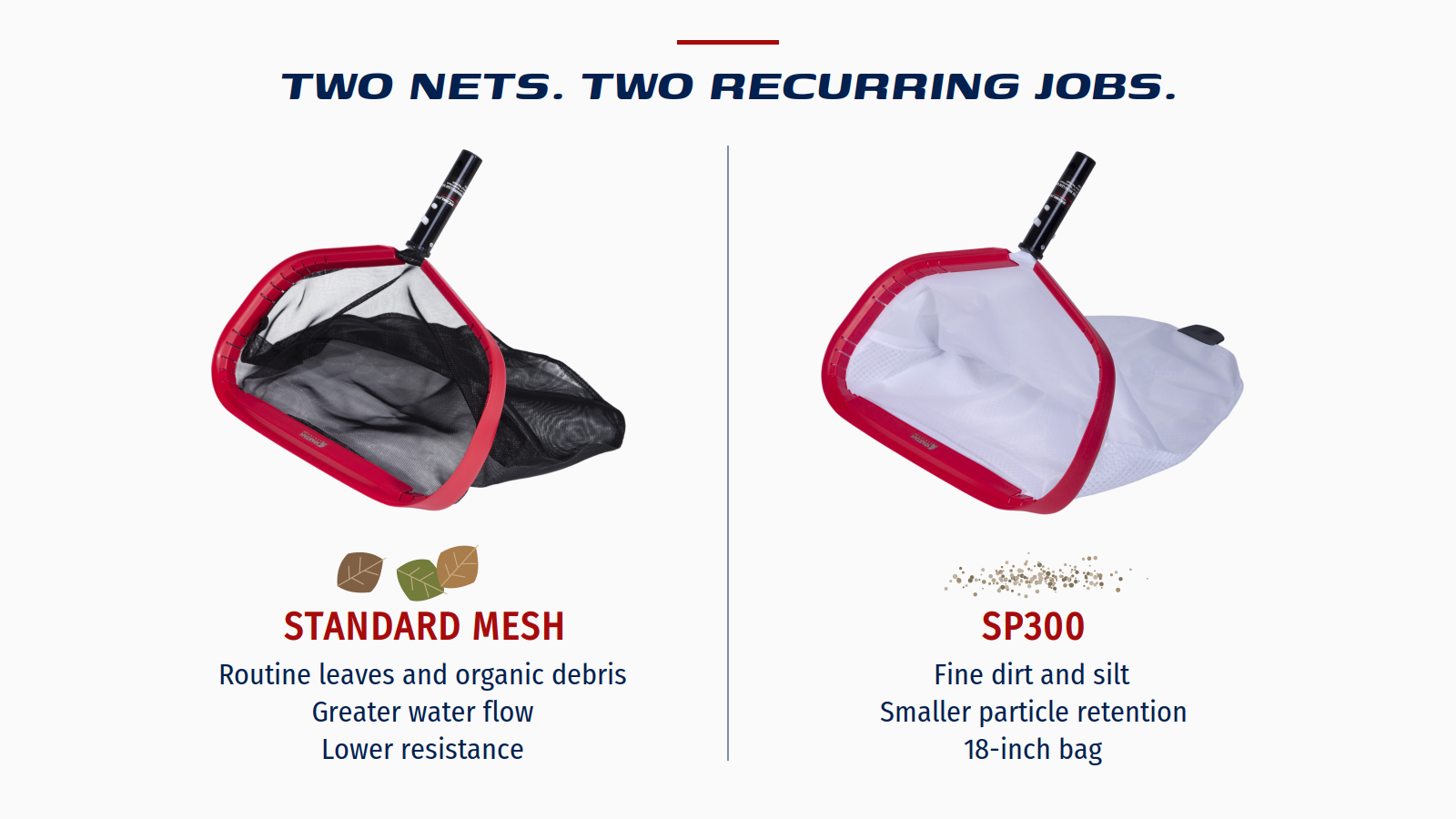
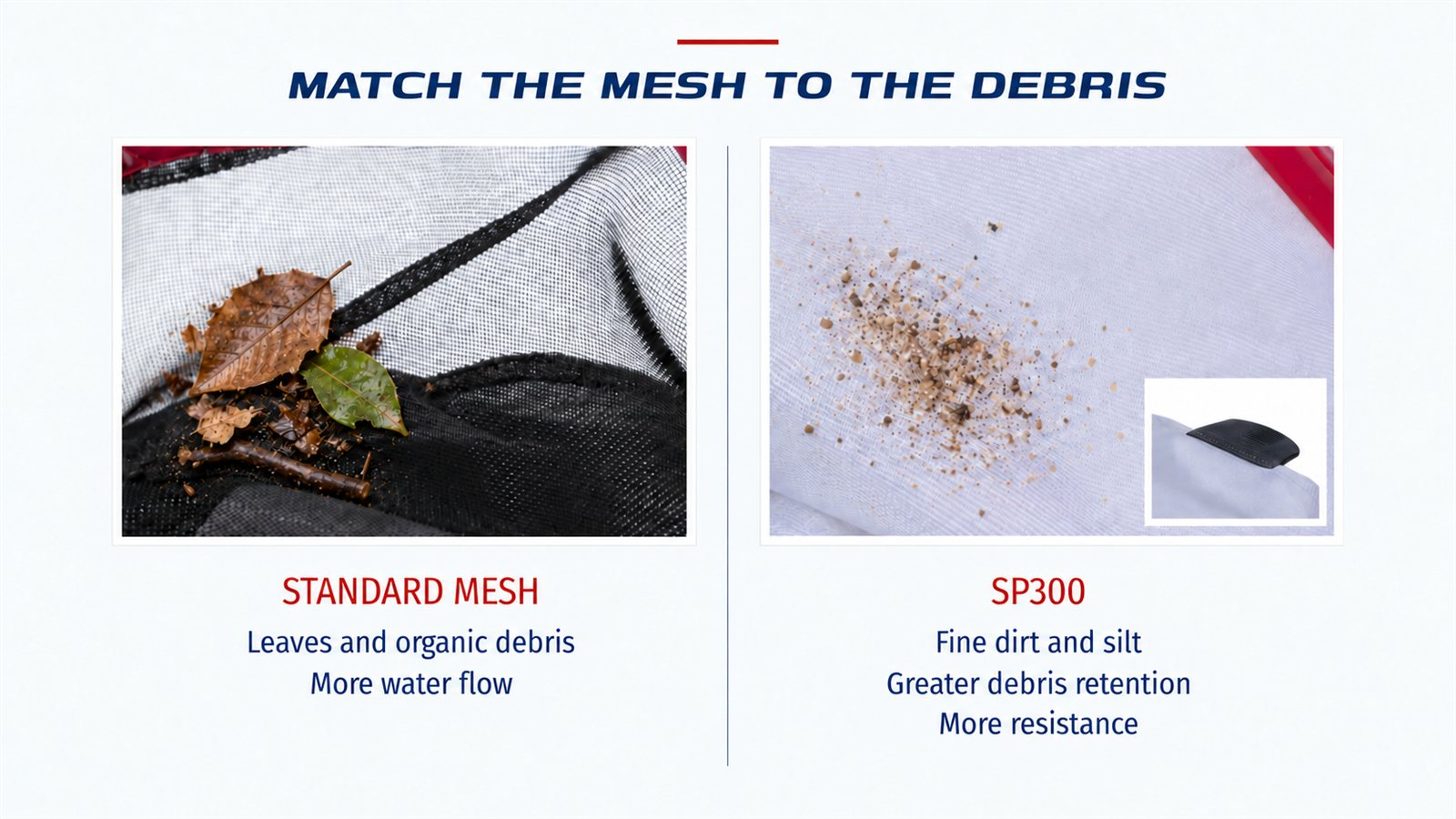
Standard mesh fits common leaves and organic debris. The fine mesh used by the Spartan SP300 holds smaller debris, dirt, and silt that may pass through a more open bag.
Fine mesh allows less water to pass through the bag than standard mesh, creating more resistance in exchange for capturing smaller material.
Use fine mesh for recurring silt and fine debris rather than as the default choice for every stop.
Skimmer Net vs. Leaf Net: Which Tool Fits the Stop?
A skimmer net uses a shallow pocket to collect light debris near the surface. A leaf rake uses a deeper bag to hold larger debris loads and collect material through the water column or from the pool floor.
Choose the Durapro SS4 for a 4-inch pocket or the Durapro SS8 for an 8-inch pocket when the route calls for surface skimming. Durapro skimmers are available through your local distributor.
When a Second Net Earns Space on the Truck
Select the first net for the debris condition seen most often, then add a second style for a different particle size, bag capacity, mouth width, or emptying method.
Primary setup
Use the Spartan leaf rake that handles the recurring debris across most of the route.
Secondary setup
Add the SP200 for deeper capacity, SP300 for fine debris, SP400 for wider coverage, SP100 for a shallower standard-mesh option, or SP500 for Easy Flip emptying.
A two-net setup should solve two distinct recurring jobs rather than duplicate the same configuration.
When Is It Time to Replace a Pool Net or Its Parts?
Use condition and performance instead of a fixed replacement schedule. A pool skimmer net replacement does not always require replacing the entire tool.
- Torn mesh that no longer holds debris reliably.
- Frame damage or loss of shape that affects collection.
- Loose connection points that make the tool difficult to control.
- A worn leading edge that no longer guides debris into the bag.
Skimlite Spartan leaf rakes are built to be serviced rather than replaced. Replacement bags and rims are available through your local distributor, so a torn bag or a damaged rim is a parts order instead of a new rake. Replace the worn component when the rest of the tool is still performing correctly.
PRODUCT NOTE: Spartan leaf rakes use fully replaceable components, helping route teams keep the tool in service instead of discarding the entire rake.
Build Your Route Setup With Skimlite
Start with the Spartan leaf rake suited to the debris you see most, then confirm the pole reach and construction that completes the setup. Spartan leaf rakes are available at Skimlite.com and through your local distributor.
| Route Need | Skimlite Option | Why It Fits |
|---|---|---|
| Routine debris | Spartan SP100 | 17.5-inch frame with a 14-inch standard-mesh bag. |
| Quicker emptying | Spartan SP500 | 16-inch standard soft-mesh bag with Wear Guard and Easy Flip design. |
| Fine dirt and silt | Spartan SP300 | 18-inch fine-mesh bag with Wear Guard for silt and fine debris. |
| Heavy leaf loads | Spartan SP200 | 20-inch deep standard-mesh bag for greater capacity. |
| Wider coverage | Spartan SP400 | 19.5-inch mouth with an 18-inch standard-mesh bag. |
| Surface skimming | Durapro SS4 or SS8 | Shallow 4-inch or 8-inch pocket for collecting light surface debris. Available through your local distributor. |
Frequently Asked Questions
What is the best pool skimmer net for a route with recurring debris?
Match the net to the debris you see most on the route. The Spartan lineup covers common leaves, silt, deeper debris loads, and wider surface areas, so pick the model built for the condition you see most often, then add a second net for a different recurring job.
What is the difference between a skimmer net and a leaf net?
A skimmer net has a shallow pocket for light debris near the water's surface. A leaf rake has a deeper bag for larger debris loads and material below the surface. Durapro SS4 and SS8 skimmers are available through your local distributor.
Which pool net works best for silt and fine dirt?
Choose a net designed for smaller debris. The Spartan SP300 uses an 18-inch fine-mesh bag built to hold silt and dirt that pass through standard mesh.
Should a pool professional carry more than one net?
A second net makes sense when recurring stops require a different mesh, capacity, width, or emptying method from the primary net.
Which mesh works best for leaves versus silt?
Standard mesh handles common leaves and organic debris. The fine mesh used by the Spartan SP300 holds smaller particles like dirt and silt, but it restricts water flow more than standard mesh. Match the mesh to the debris you see most often.
Should a route technician choose a deeper bag or a wider frame?
A deeper bag holds more debris before emptying, which helps on stops with heavy leaf loads. A wider frame covers more surface area per pass, which helps on larger pools. Choose based on the debris volume and pool size you see most on the route.
When should a pool net be replaced?
Inspect the tool for torn mesh, frame damage, loose connection points, loss of shape, or reduced debris retention. On a Skimlite Spartan leaf rake, a replacement bag or rim from your local distributor will often put the tool back in service without replacing the whole rake.
Complete the Setup With a Skimlite Pole
Skimlite has built professional pool tools in the USA since 1954. CarbonLite poles use 100 percent carbon-fiber tubing with Lever Lock adjustment in 14-foot, 17-foot, and 21-foot lengths, weighing 2.5 to 3.5 pounds. CarbonLite poles are made in the USA and are available at Skimlite.com and through your local distributor.
For a commercial-grade aluminum option, the Dually 9018 extends from 6 feet 8 inches to 17 feet 6 inches, weighs 4.5 pounds, and combines an outside thread lock with an internal cam lock. It is available at Skimlite.com and through your local distributor.
For help choosing pole length and lock type, read Skimlite's guide to buying pool poles.
Build the pool net setup that fits your route.
SPARTAN LEAF RAKES AND CARBONLITE POLES ARE AVAILABLE AT SKIMLITE.COM AND THROUGH YOUR LOCAL DISTRIBUTOR